
Pike County Busted Mugshots
A busted mugshot is really a booking photo, made by a jail or law-enforcement system when someone is processed at intake. The booking record behind it is broader. It can tie a name to the arresting agency, charges or holds, custody dates, and the report period. The Pike County Sheriff's Department runs the Pike County Jail in Pittsfield. Pittsfield Police Department entries also turn up in the county's official weekly report. Barry gets its law enforcement from the Sheriff under contract, and the Sheriff's Patrol Division lists Griggsville among the communities it covers.
The public trail has clear stops. A deputy or officer makes the arrest. The jail handles intake and custody. A court takes the case from there. A person might then post bond, stay confined, be released, or move to another authority. One dated county log can show several of those states at once, and a "Released" field only means released from the custody that particular report covers.
Match the source to the question. The Pike County Jail operations page explains custody procedures but posts no public roster of current inmates. The Pike County Weekly Arrests query is the official seven-day incarceration report. For a booking record or a photo request, the Sheriff Records / Civil Process office is the fallback. Different records live with different custodians.
Timing explains most confusion. Someone just booked may not appear online yet. A confined person may show up in the next weekly report. A released person can drop out of current custody views while the booking record stays requestable. Anyone sentenced to state prison moves into the Illinois Department of Corrections system, outside any county jail search.
Note: The Sheriff’s public pages do not state a booking-photo retention period or promise a posting time for a new arrest.
History adds a little flavor here. The Sheriff's own jail history page says the jail on its present site was built in 1861 and gained an addition in 1984. A separate Illinois Sheriffs' Association profile lists a different bed count than the county page does. Treat those figures as history rather than a live custody tally. For actual records, the weekly query, the records office, and the court remain the practical path.
Want to see the official page itself? Open the Pike County Jail operations source shown below. It documents bond, visitation, and jail contacts. What it does not offer is a photo gallery or a live roster.
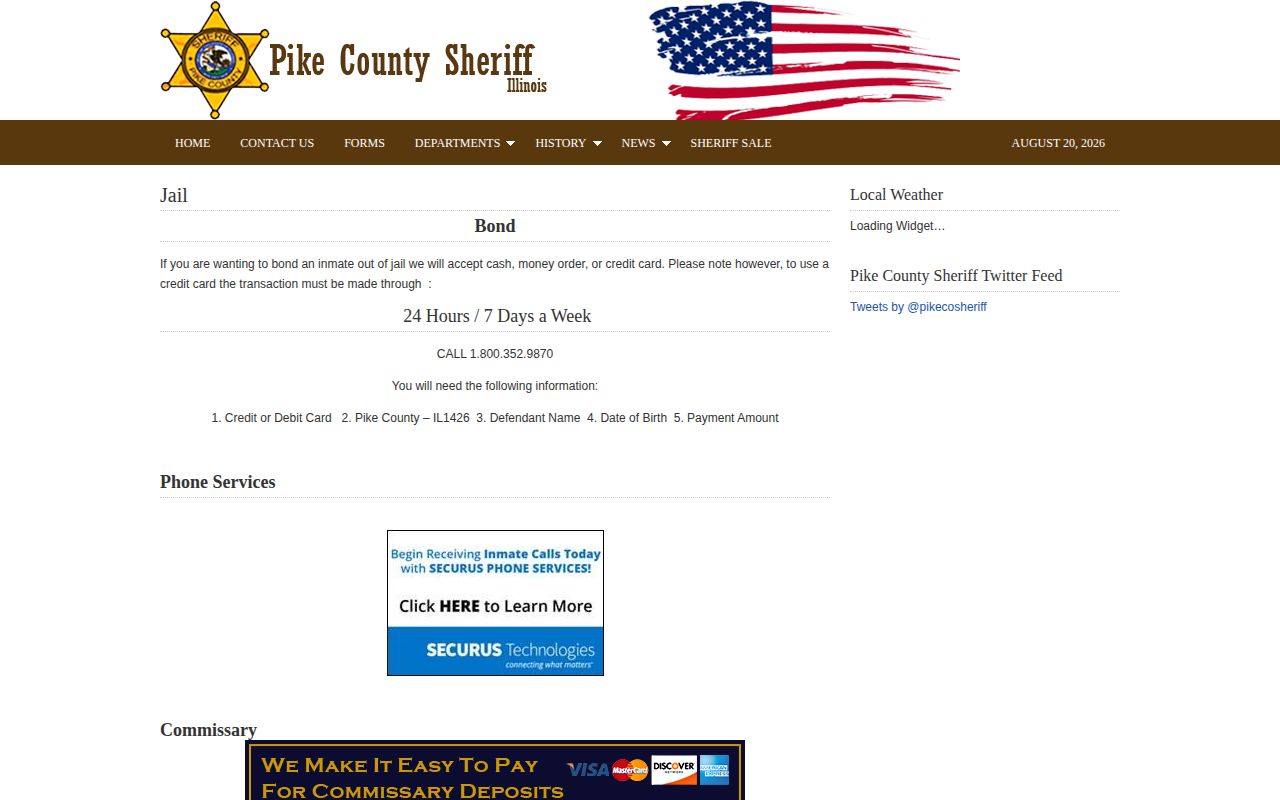
The screenshot comes from the jail operations channel. It is not evidence that a current booking photo is posted online.
Pike County Busted Booking Fields
The official Weekly Arrests page calls its report an "Incarceration Query" and names Pike County Jail. A date range comes first. Then you get a table of fields, including charge and hold rows. It's a useful public snapshot of who was booked. Still, it stops short of the full jail-management record. The inventory below keeps the county's published fields separate from items never observed online.
| Field or record item | What it tells you |
|---|---|
| Inmate name | The person listed in the report. It is not a finding of guilt. |
| Sex, race, age, and DOB | Agency data fields. Age can change, and sensitive details should not be repeated without a need. |
| Address and city of birth | Published source fields that must not be confused with one another or treated as an arrest location. |
| Confined | A custody value for the report period. It is not a live locator after the report is compiled. |
| Released | A recorded custody transition. It does not state why the person was released or what the court decided. |
| Arresting agency | Helps distinguish Pike County Sheriff activity from Pittsfield Police or another agency. |
| Charge or hold rows | The charge, warrant, body attachment, failure-to-appear, or other hold language shown by the agency. |
| Booking number, bond, court date, photo | Not separate fields in the observed public table. Ask Records or the court for the right source. |
Illinois FOIA Section 2.15(a) describes a wider arrest-record set. Identity, age, and address are covered. So are a photograph when and if available, charges, time and place, arresting agency, and receipt, discharge, or transfer dates. Section 2.15(d) caps the fee for a record furnished under that section at actual copying or reproduction cost, with no labor charge allowed. That phrase matters. "When and if available" means you may request a photo, but the law does not promise Pike County created one, kept one, or can disclose one.
The weekly table also stops short of court outcomes. Disposition means the later court result. Think a dismissal, a plea, an acquittal, or a judgment. A booking record ends much earlier than that. For what happened after intake, use the Pike County Circuit Court page and its Judici link.
Request Pike County Busted Records
The Sheriff's Records / Civil Process office handles the county records route. Email your request to abrawdy@pikecountysd.org, fax it to 217-285-4334, or mail it to Attn: FOI, Pike County Sheriff's Department, 204 E. Adams Street, Pittsfield, IL 62363. A downloadable request form is linked from the official Freedom of Information and 911 form page. Need a Pittsfield incident report or a city-held photo? Route that through the Pittsfield FOIA form instead.
Pike County Sheriff Records
Records / Civil Process / FOIA
204 E. Adams Street
Pittsfield, IL 62363
217-285-7000, ext. 101
abrawdy@pikecountysd.org
Fax: 217-285-4334
Be specific when you write. Name the person. Name the arresting agency. Give a date or date range. Then ask for the booking or intake record, custody receipt, discharge or transfer dates if maintained, charges as booked, and bond information if maintained. Request a booking photograph only if one was created and can be disclosed. A focused request cuts confusion, since the weekly report can mix Pike Sheriff and Pittsfield Police entries.
- Identify the record holder. Use Pittsfield Police for the city incident report, and Pike Sheriff Records for the jail intake or county-held booking material.
- Use the official form, email, fax, or mailing route. State that the request is under the Illinois Freedom of Information Act, 5 ILCS 140.
- Give the full name, arresting agency, approximate date, and requested record type. Ask the agency to say if no photo exists.
- Request a fee estimate before an unusual reproduction cost. The county page does not publish a booking-photo-specific fee; do not borrow the civil-process charges for that purpose.
- Save the request and response. If material is withheld, ask for the exemption and the non-exempt portions, then consider the Illinois Public Access Counselor route.
Timing matters with FOIA requests in Illinois. The standard clock runs five business days, and the law allows extensions plus exceptions. Section 2.15(a) moves faster for arrest records kept in chronological order. Those must be furnished as soon as practical, and no later than 72 hours after the arrest. Photos are another matter. An agency may need time to locate an image, review exemptions, redact protected details, or confirm that another custodian holds it. So a 72-hour photo is possible, never promised.
Start with the official Pike County FOI page. Filing the form opens a request route. It does not guarantee a photo in the web report.
A search-engine copy can't answer everything. The records office can. Staff there can say whether an image was created, retained, or withheld.
Illinois Mugshot Law and Corrections
The state FOIA opens a path to arrest records, photograph included. Under the 5 ILCS 140/2.15 arrest-record provision, a photograph is listed when and if available. Exemptions exist too. Juvenile information can stay protected. So can investigative material. In practice, the Pike County weekly table carried no routine photo column. The Sheriff's Press Release archive sometimes posts a case-specific image, but that selective habit is not a mugshot roster.
Correction law lives in 815 ILCS 505/2QQQ. The statute covers published criminal-record information: arrests, charges, dispositions, arrest photographs, and identifying details. A for-profit site within its scope must fix an inaccurate item within five business days of notice. There is no general right to erase an accurate current record just because it is unwanted. Exceptions apply. The result turns on the source and the facts.
Important: Stop before paying anyone who promises to scrub an accurate Pike County booking record. Check the court disposition first. It is the source that matters. No third party can lawfully suppress a record that is correct, and a seller promising otherwise is selling smoke.
Spotted an error on an official page? Save the URL. Pin down the exact mistake. Attach a court or agency document if you have one. Then ask the source agency to correct its own record through Records or FOIA. For a publisher that copied the record, send a factual correction request with supporting material. Mugshots.com lays out a no-fee correction approach on its historic Pike County page. RecentlyBooked's general policy does not prove an Illinois Pike section exists, and WhosArrested offers no usable local opt-out route.
Expungement and sealing begin in court, under 20 ILCS 2630/5.2. Eligibility and waiting periods shift with the disposition and the offense. The Illinois Courts' approved forms explain the statewide process. Per the Illinois State Police fee schedule, a petition carries no charge, though a $60 processing item applies to a court order that expunges or seals a criminal-history record. One order does not automatically reach every copied page. Hand it to the arresting agency and the publishers, then use Google's Refresh Outdated Content tool after the live page changes.
Juvenile court records that have not been expunged are generally sealed under 705 ILCS 405/1-8. That statute allows only narrow routes for access. Names and photos of minors should never be repeated from a copied page unless a lawful public-access exception is established. Accuracy relief is a court and agency matter. No private reference page can promise a takedown.
For the statute's exact wording and the public-record boundary, read the official Illinois arrest-record text. Note: the screenshot below is a source document, not a booking image.
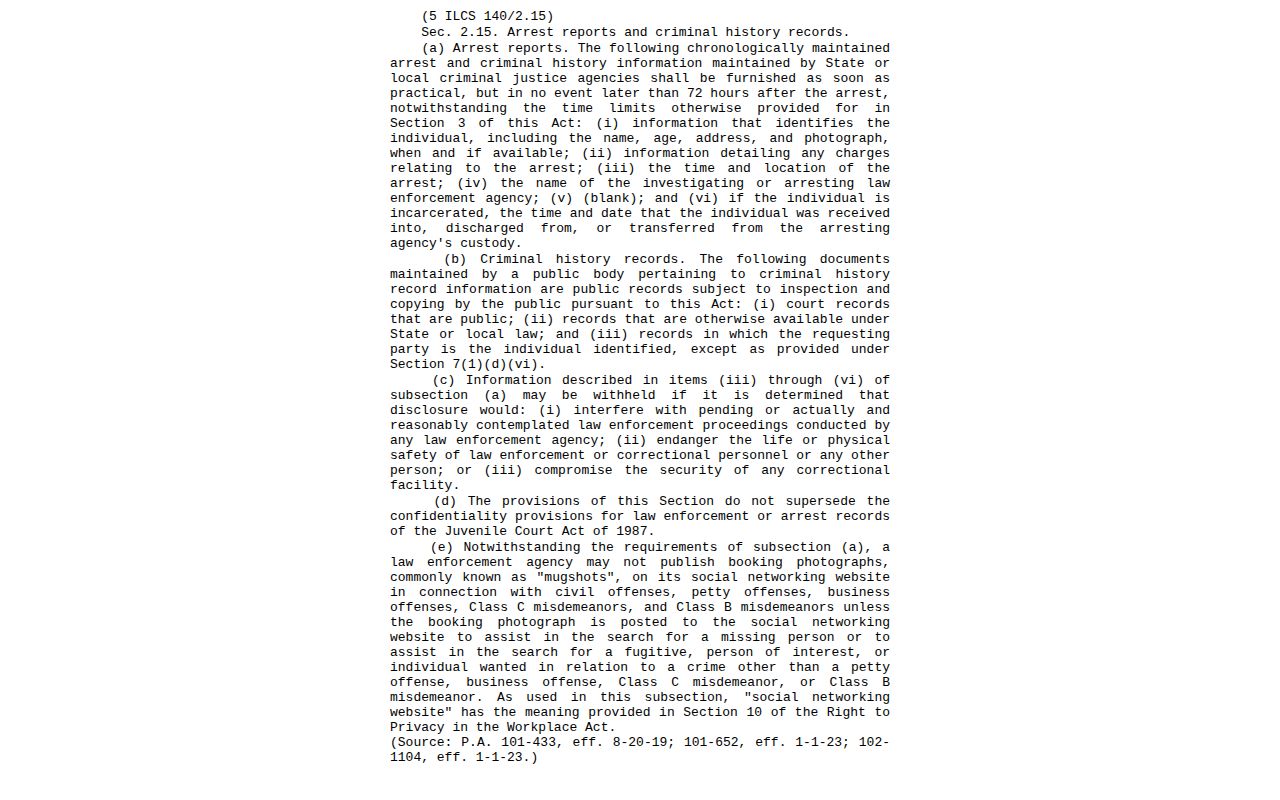
The statute supports a records request. Whether a photo exists, and whether an exemption shields it, depends on the facts of the record itself.
Find Pike County Busted Records
Go official first, and stay aware of custody status. Pike County has no verified same-day public roster, so a fresh arrest may not appear right away. Read the date range on the official report. Keep the arresting agency in view the whole time.
- Open the Weekly Arrests query and read its displayed seven-day range before reading a name.
- Check the arresting agency and charge or hold rows. A Pittsfield Police entry is not the same incident report as a Pike Sheriff entry.
- Read “Confined” and “Released” as the dated report’s custody values. They are not a live location and do not explain the legal reason for release.
- Use the Sheriff’s Press Release archive for selected cases only. It can contain transfer or release language and sometimes a case-specific image, but it is not complete.
- Use the IDOC offender search if the person was sentenced to Illinois state prison, not for ordinary county intake.
- Use the Pike Circuit Clerk and Judici path for the case and disposition after booking.
- Use BOP, ICE, or the relevant federal court and facility when the record is federal. A federal locator is not a Pike County booking-photo service.
- Request the booking record or photo from the agency that maintains it when the online source does not answer the question.
What if a new arrest is missing? Don't take a third-party "recent" tag as proof that an official entry should already exist. Call the Sheriff's Records / Civil Process office at 217-285-7000, extension 101. Or write to abrawdy@pikecountysd.org. A report can still be in intake, awaiting a judge, held by another authority, or slated for the next weekly publication.
Where Pike County Busted Mugshots Appear
Photo access turns on who holds the record. Official Pike County pages come first. Secondary sites carry real risks. They may copy an old weekly report, confuse Illinois with another Pike County, skip a release, or preserve an image long after the source has changed. Treat them as leads only.
| Channel | Photo or record | Status and access |
|---|---|---|
| Weekly Arrests | No routine photos observed | Official seven-day booking and incarceration query |
| Jail page | No live photo search | Official operations, bond, visitation, and jail contacts |
| Press Releases | Sometimes case-specific images | Official but selective, not a complete roster |
| Records / FOIA | Ask if a photo exists and is disclosable | Official request path for county-held material |
| IDOC search | State-prison identification photo may appear | Official, limited to IDOC custody or parole records |
| Court and Judici | Usually a case record, not a booking photo | Official disposition route after booking |
| BOP, ICE, and USMS | No routine federal locator photos | Different custody systems and custodians |
| Herald-Whig | Weekly stories, no routine face tiles observed | Secondary reporting based on Sheriff records |
| Muddy River News | Blotter text and generic images sampled | Secondary weekly countywide coverage |
| Mugshots.com | Historic third-party pages may carry images | Unofficial, old date filters, not current custody |
| WhosArrested and JailExchange | No verified current official photo feed | Unofficial county directories or copied reports |
The big aggregators show no Illinois Pike County local page. That goes for Busted Newspaper, RecentlyBooked, Arrests.org, and Mugshots.zone. Watch for the wrong state. Search results often land on Pike County in Alabama or Kentucky instead. A local label alone proves nothing. Before treating any entry as relevant, confirm the state, county, source date, and original agency.
For a documented third-party example, see the historic Illinois Pike County section below. It appears here as a sample of the secondary landscape, not as a current booking list.
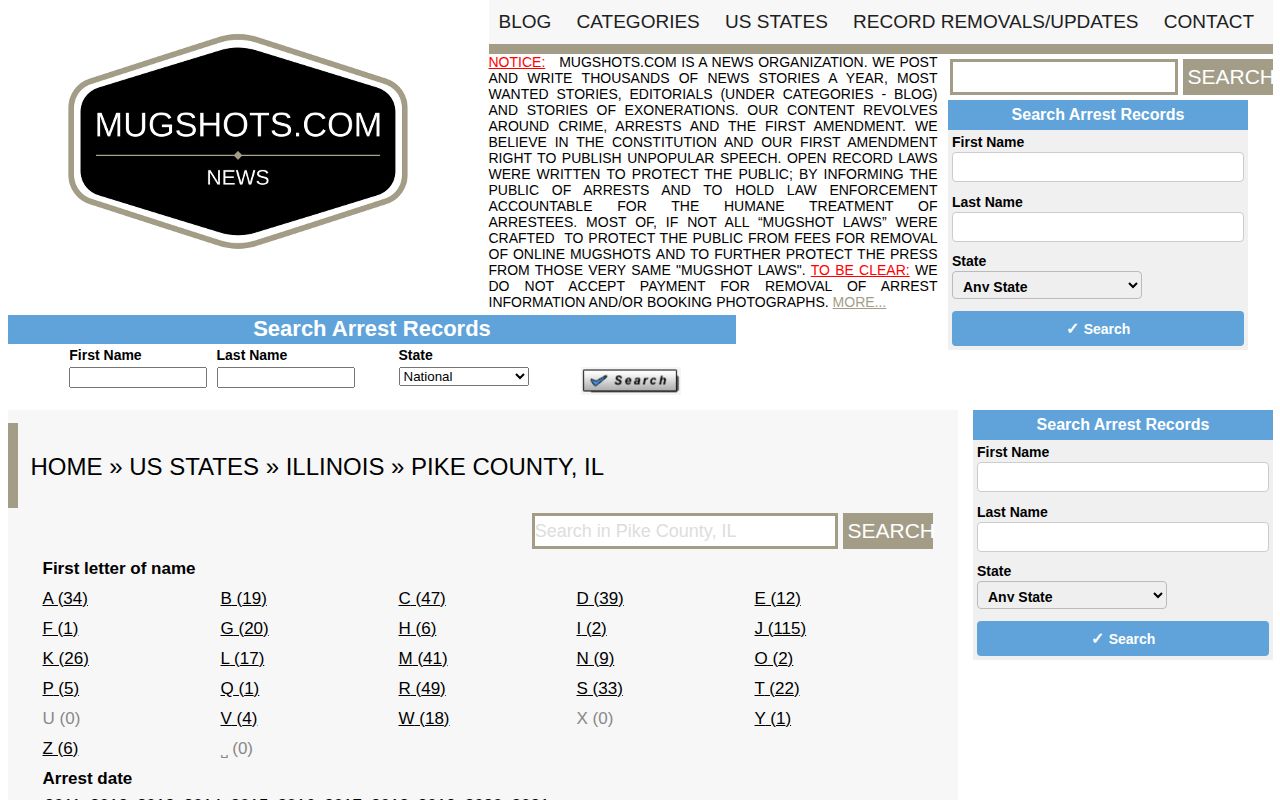
A screenshot of a copied page proves one thing. The page existed. It cannot stand in for the Sheriff's weekly report, the Records office, or the court docket. Always check the date on any copy. Then compare it against the official source before you rely on it.
Busted Pike County Roster Status
Pike County does not offer a verified public current-inmate roster. There is no routine jail mugshot search through the Sheriff's jail page. The closest thing to a live view is the official Weekly Arrests query. That report covers a rolling seven-day span. So the people listed may still be confined or may already be out. Calling it a live roster would stretch the truth. Treat it as a weekly arrest report, nothing more.
| Observed report field | How to read it |
|---|---|
| Inmate Name | Name listed in the dated report. |
| Sex, Race, Age, DOB | Agency fields, not a personal profile or guilt finding. |
| Address, City of Birth | Separate source fields, not a current location promise. |
| Confined, Released | Custody values for the report period. |
| Arresting agency | The agency tied to the event, including Pittsfield Police entries. |
| Charge or hold rows | Charges or administrative hold language shown by the source. |
What the county does not publish is just as clear. There is no public booking number field, no bond amount, and no court date column. No routine photo lineup is attached to the report either. The Sheriff's Press Release archive puts out selected images on its own schedule. The official iOS app handles communication, news, tips, and reports rather than inmate lookup. Need a same-day answer? Call Records or the jail directly. Refreshing a third-party directory will not turn it into a live Pike County roster.
Note: Seven days describes the report window, not a deletion schedule. Older weekly PDFs can remain in the official media archive.
Busted Last Week: Pike County Arrests
One verified official feed covers multiple days for Pike County. The Weekly Arrests page runs on a seven-day range, most recently August 10 through August 16, 2026. That is not a 24-hour or 48-hour blotter. It should never be described as new bookings only. Some entries will be days old by the time they post. No verified same-day URL appears anywhere in the Sheriff's navigation or site search.
| Window | Official result | Practical fallback |
|---|---|---|
| Same day or 24 hours | No verified public feed located | Records / FOIA or official jail contacts |
| 48 hours | No separate public interface found | Do not substitute an unofficial “recent” label |
| Seven-day query | Official Weekly Arrests, no routine photos observed | Read the displayed date range and custody fields |
| Press stream | Official, selective, sometimes image-bearing | Use only for cases the Sheriff selected to publish |
Older reports stay online once published. The WordPress media archive holds weekly PDF files for November 24 to 30, 2025, December 1 to 7, 2025, and December 29, 2025 to January 4, 2026. That persistence is a website habit, not a formal retention schedule for jail records or booking photos. A dated arrest report freezes one week in place, so pair anything you find there with the current court record before drawing conclusions. For the report interface itself, use the official Weekly Arrests source. The screenshot documents the interface, not a gallery of faces.
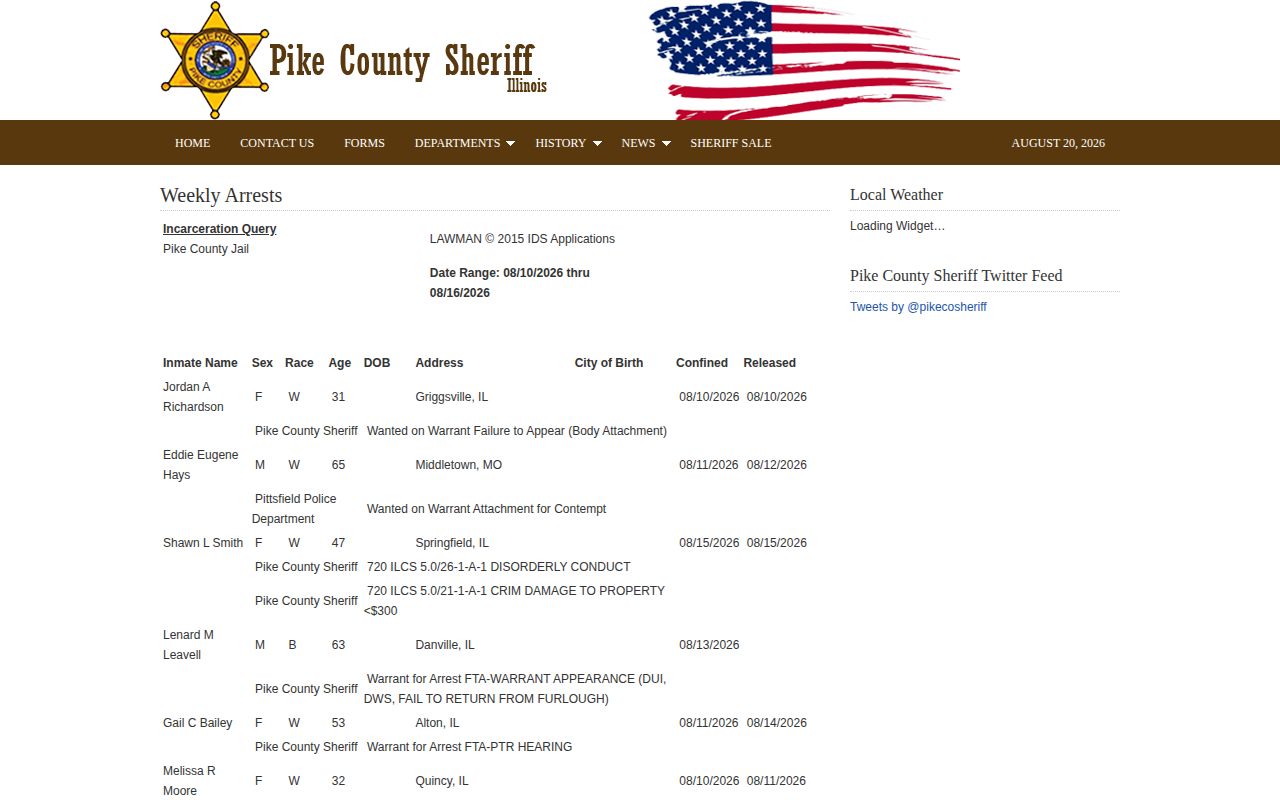
Start with the date range. Always. Someone listed in a report may walk out the same week it posts. A person can also leave Pike custody straight into another agency's hands. The report itself may never show that handoff.
Pike Sheriff App and Alerts
The Pike County Sheriff's Office iOS app is free. It handles communication, news, tips, and reports. Its own listing says emergencies belong with 911. Nowhere does it promise an inmate search, booking alerts, or a photo feed. The Sheriff's News page also links official Twitter and Facebook accounts, though neither follows a regular mugshot schedule. Illinois VINE works differently. It serves as a custody-notification route that can flag custody changes, transfers, or releases when the person and facility are registered. It is not a photo source. It may also miss county events. Crime Stoppers, at 217-285-1500, takes anonymous tips and offers possible rewards. It neither confirms warrants nor sends custody alerts. For the app itself, the Apple listing is the official channel. Its description fits a communications tool, not a mugshot app.
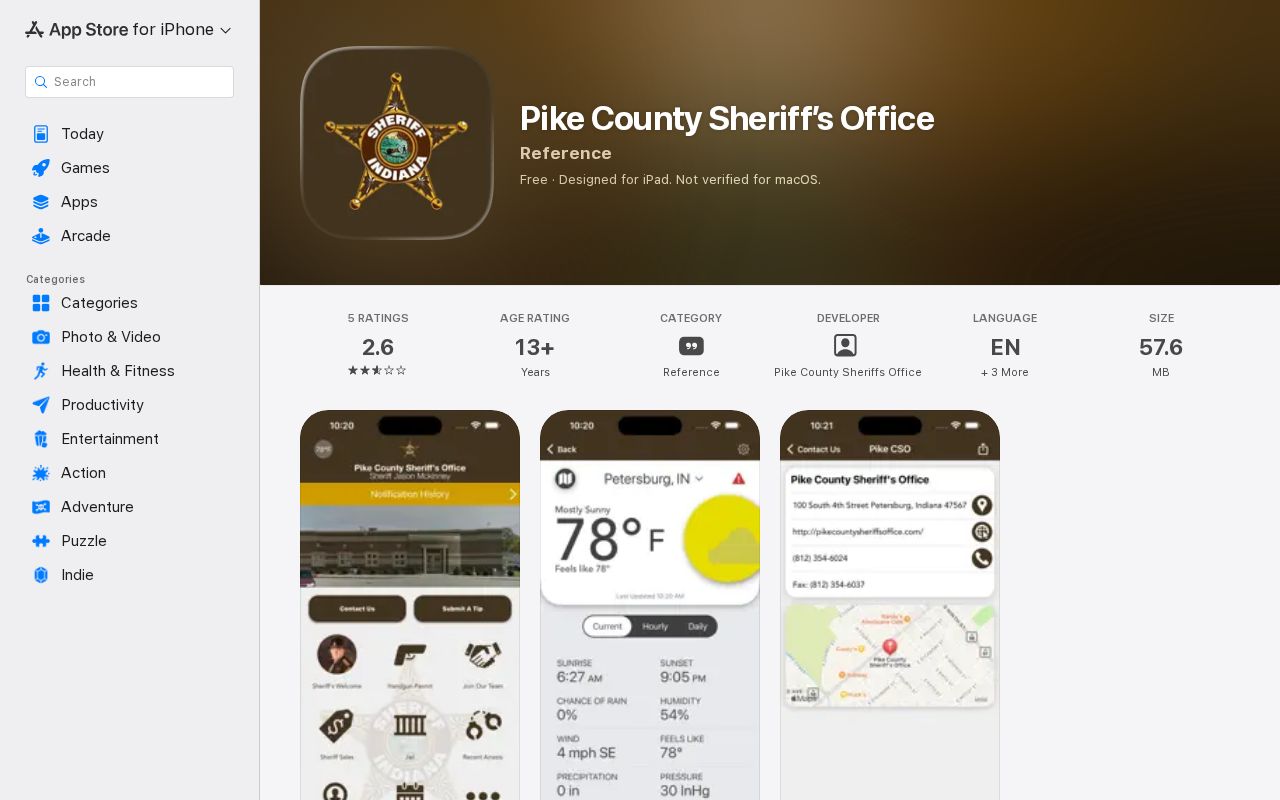
No county email alert, text list, Android roster app, or "Warrant Wednesday" booking feature exists in any official Pike County channel. Do not expect one to appear.
IDOC Offender Photos
The Illinois Department of Corrections answers a different question. Does someone sit in the publicly searchable slice of state custody or parole? The IDOC offender search takes a last name, an IDOC number, or a birthdate. A profile can return the name, IDOC number, institution, status, vital information, admission and release data, sentencing details, and a photo when one exists. IDOC's photo standards cover front and profile admission images, updates, electronic storage, release photographs, and long-term retention. Those rules govern state prisons. They do not reach the Pike County Jail. IDOC tracks people sentenced to state prison or held in state custody or parole. An ordinary county booking falls outside its reach. So does a county warrant hold, federal custody, or most names in the Weekly Arrests table.
- Search the official IDOC page by last name or IDOC number, adding a birthdate when available.
- Compare the profile’s name and vital information carefully because similar names occur.
- Read status and location as the state record’s custody information, not as the original Pike arrest date.
- Label a displayed image an IDOC identification photo. Do not call it the county booking photo without a source.
- If a completed sentence no longer appears, use the IDOC FAQ or records contact rather than a copied image.
For state-custody records, start at the IDOC search landing page. Keep in mind that a release from IDOC or from Pike County custody settles only the custody question, not the court outcome.
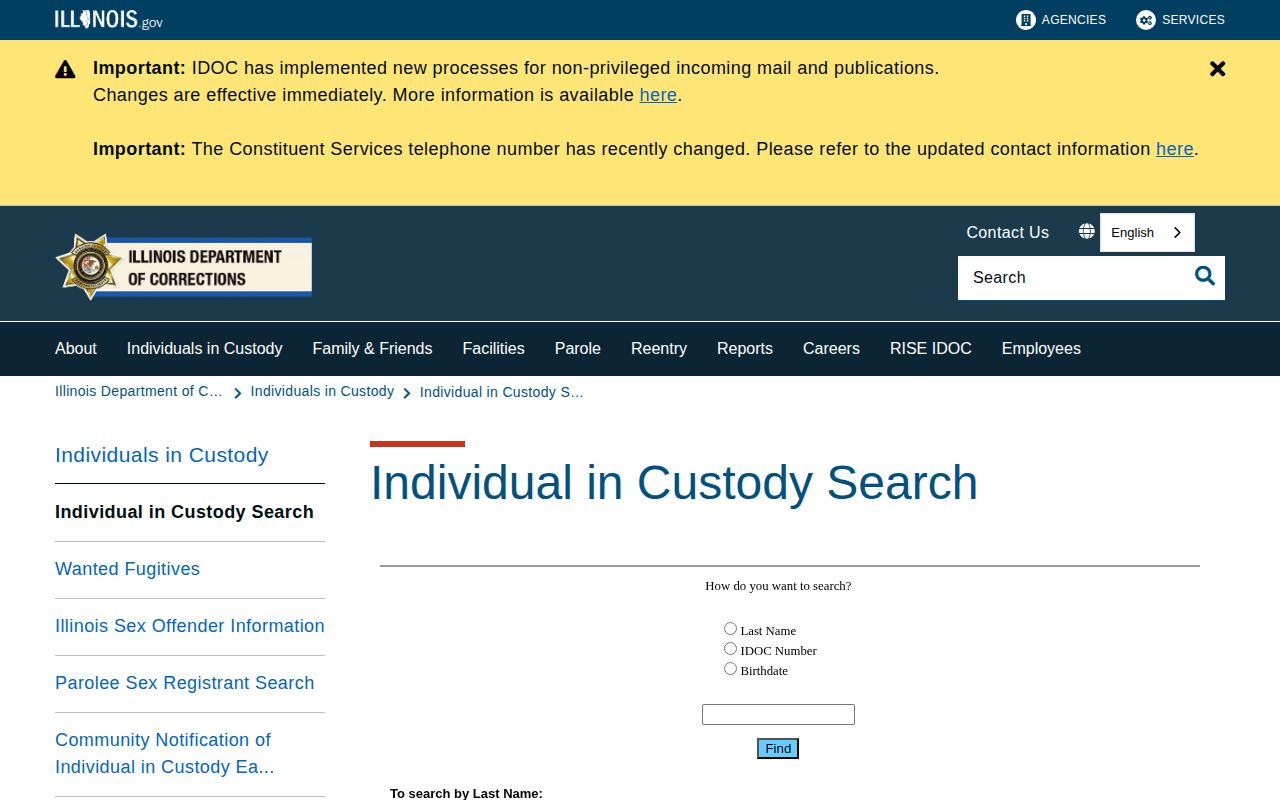
The correct label is state offender record, not county jail booking record.
Busted, Released, or Transferred
One name can travel through several systems in a single month. The report date matters. So does the custody authority behind an entry. Both matter far more than a search result's headline. Work through the comparison below before treating any Pike County entry as current fact.
| Custody state | Likely source | What remains uncertain |
|---|---|---|
| Just booked or awaiting first appearance | Jail intake and a later Weekly Arrests report | Posting time, photo creation, bond, and current location |
| Still confined in the dated report | Weekly Arrests “Confined” field | Current status after the report was compiled |
| Released from Pike County custody | “Released” field, press release, or Records request | Whether release followed bond, court action, transfer, or another event |
| Sentenced to Illinois state custody | IDOC offender search | How the original county charge was resolved |
| Federal or immigration custody | BOP, ICE, USMS, court, or federal facility | Federal locators do not provide routine booking photos |
A "released" flag can hide a handoff. A federal pretrial detainee may sit in the local jail while the U.S. Marshals Service keeps responsibility for federal custody. Read the exact transfer language in the source, then ask the agency actually holding the person.
After the Pike County Bust
Once a Pike County booking happens, the case moves into court channels with their own vocabulary. First comes the arraignment, where a judge takes up custody and the charges. Bond is the money or condition path to release. A detainer means another authority has asked to hold or transfer the person. The disposition is simply how the court case ends up. Each word marks a step in the system. None of them describes who a person is.
Want to follow a real case? The Pike County Judici case search lists public docket details, though sealed and nonpublic matters stay off it. If the site stalls, call the Circuit Clerk at 217-285-6612. Match the name and case fields carefully. A charge line in a weekly arrest report is not the final word on anything.
Pike County booking entries and press reports capture one moment: an arrest or custody event. Cases change afterward. The official docket tells that later story.
For the county court side, open the Judici search linked here. It traces a case through the courts. It is not a booking-photo gallery. Don't expect inmate images there.
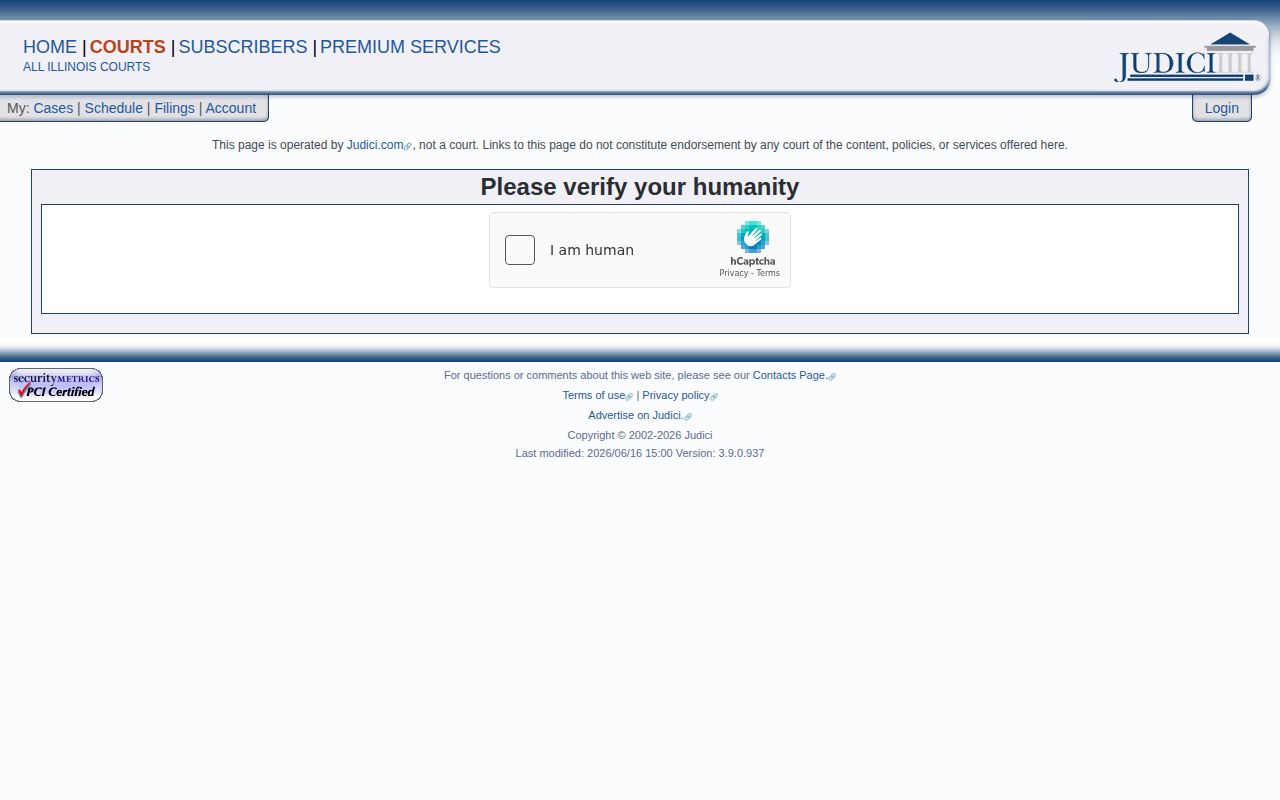
To learn what happened after the booking charge, the docket and its disposition are the records that matter.
How Long Until Pike Bookings Appear?
Pike County's public site sets no deadline for posting new bookings. The Weekly Arrests query covers a rolling seven-day window. The jail page adds a separate rule: an inmate who has not yet seen a judge cannot have visitors. That's custody policy. It is not a promise about online timing.
Someone arrested today might still be at intake, waiting for a judge, released, moved, or held for another agency before the next weekly report drops. Urgent questions go through the Sheriff Records / FOIA route or the jail's listed contacts. A third-party page labeled "recent" proves nothing about Pike County's own entries.
Pike County Bond and Release Timing
Paying bond in Pike County is simple on paper. The jail page lists cash, money order, or credit card. Card payments go through a round-the-clock line at 1-800-352-9870. You'll need county code IL1426, the defendant's name and date of birth, and the amount. Those are just mechanics. No bond schedule exists there. Nothing predicts when a release shows up online.
The "Released" value in the Weekly Arrests report gives no reason. Bond, recognizance, a court order, time served, or a transfer could all explain it. Bond orders come from the court. Dates come from the report. Read the two separately.
Why the Pike Weekly Log Can Mislead
The weekly log has a built-in trap. It mixes confined and released people in one seven-day table. Charge or hold rows may reference a warrant, body attachment, or failure to appear. That wording is not a live warrant check. Nor does the table reveal whether a release meant freedom or a handoff to another agency.
Older weekly PDFs sit in the official media library. They help with history but stay frozen in time. The county states no booking-photo retention period. So check the source date first. Name the custody status, then confirm against the court record before repeating an old entry.
Pike Sheriff App, No Busted Feed
The Sheriff's mobile app and social channels work well for agency news, tips, and safety notices. No routine booking-photo feed runs through them. No inmate lookup or county alert list either. The real image stream is the Press Release archive. Selected cases there may include a booking-photo-style picture.
That distinction matters. One press release photo doesn't turn the Weekly Arrests query into a mugshot gallery. Keep the original link and case context with any image. Never paste faces into a grid that implies every weekly entry has one.
Pike Court Records After a Busted Booking
Press releases from the Sheriff explain custody moves that a weekly table can't. A statement might note someone lodged at Pike County Jail, released pending court, or handed to state or federal authorities. Those details apply to that release only. Broadening them to all bookings is a mistake.
Judici and the Circuit Clerk remain the tools for tracing the public case. Charges get amended, reduced, dismissed, or resolved by plea as matters move. If a record is sealed or expunged, the court and the arresting agency decide what stays public. A copied web entry never overrides a court order.
Juvenile Pike County Records
Illinois keeps juvenile court records closed under 705 ILCS 405/1-8, unless they've been expunged. Law-enforcement files on minors carry extra limits. A press archive can mention juvenile handling without exposing an identity. Don't repeat a juvenile name or photo from a copied page without a specific lawful exception.
The same caution covers sealed adult files. It also covers victim details, confidential investigation material, and other exempt portions. A public weekly row doesn't strip those protections away. For what's actually available, ask the record custodian for the non-exempt material.
Pike Jail History and Archives
Wondering how long a booking photo stays on file? The Sheriff does not publish a retention schedule, so ask Records directly. Staff can tell you whether a given image or intake record is still kept, moved, or destroyed under an approved schedule. One caution applies. A photo leaving the website does not mean the record was destroyed, and ongoing online access is never a promise of permanent storage.
Older jail records live elsewhere. The Illinois Regional Archives Depository lists Pike County Sheriff jail registers spanning 1909 to 1972, preserved on a single microfilm reel with accession number 2/0122/01 at Western Illinois University. Call the depository at 309-298-2716 and name the series, the date span, and the entry you want. These reels are historic registers, though. They are not a source for modern booking photos.
The county's own history page adds useful context. It dates the present-site jail to 1861, with an addition in 1984. Pike County itself formed in 1821, and a fire in 1831 damaged or destroyed some early records. An archivist can confirm what survived, but no archive guarantees that every old booking name or image did. For a look at what remains online, try the official Weekly Arrests media search below, which shows the dated reports still posted by the Sheriff.
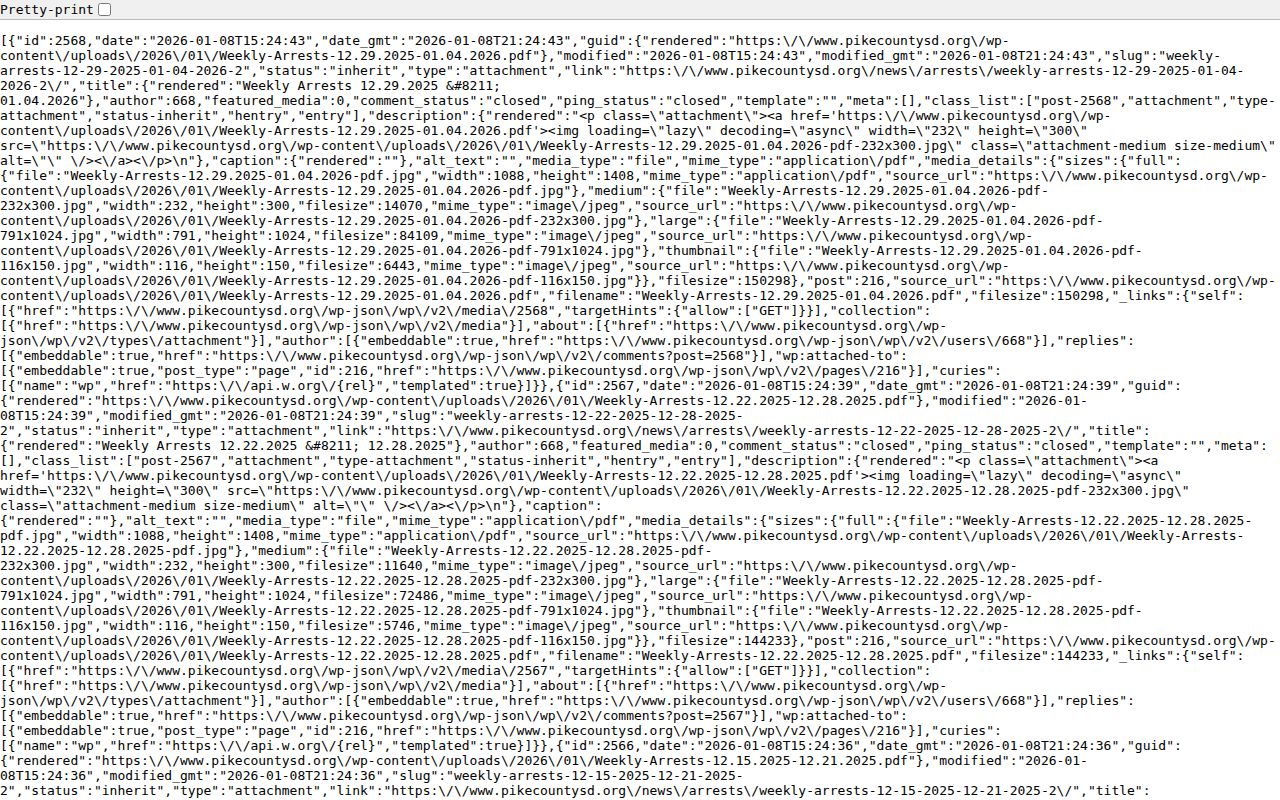
Historic research should record the report date, source, custody state, and presumption-of-innocence notice.
Illinois Photo Rules in Pike County
Illinois restricts how law enforcement can post booking photographs on social-networking sites for lower-level offenses. The law carves out exceptions, though. It is not a ban on FOIA responses, official pages, or press images tied to a specific case. Pike County leans cautious in practice. The Weekly Arrests table carries no routine photos. Selected images appear in Press Releases instead.
Before requesting anything, find out what kind of image you are chasing. A jail booking photograph, an identification photo, and a press-release image each follow different rules. Sometimes no image exists at all. If a government source shows something wrong, ask the official custodian for a correction. For eligible cases, court relief through sealing or expungement is the path that actually works.
Federal and ICE Custody
Custody questions do not always start and end at the county jail. The federal Bureau of Prisons runs a searchable locator for sentenced prisoners, and it posts no routine booking photos. ICE has its own Online Detainee Locator for certain people in immigration custody, and it skips photo rosters too. The U.S. Marshals Service often houses federal pretrial prisoners in local or private facilities. So a county entry marked released can simply mean a transfer, not freedom. Turn to the BOP locator or ICE locator only when the custody record is federal, and never guess immigration status from a hold row. The record itself must say what the hold means.
The BOP locator screenshot below illustrates one search route. It is not a source of county mugshots.
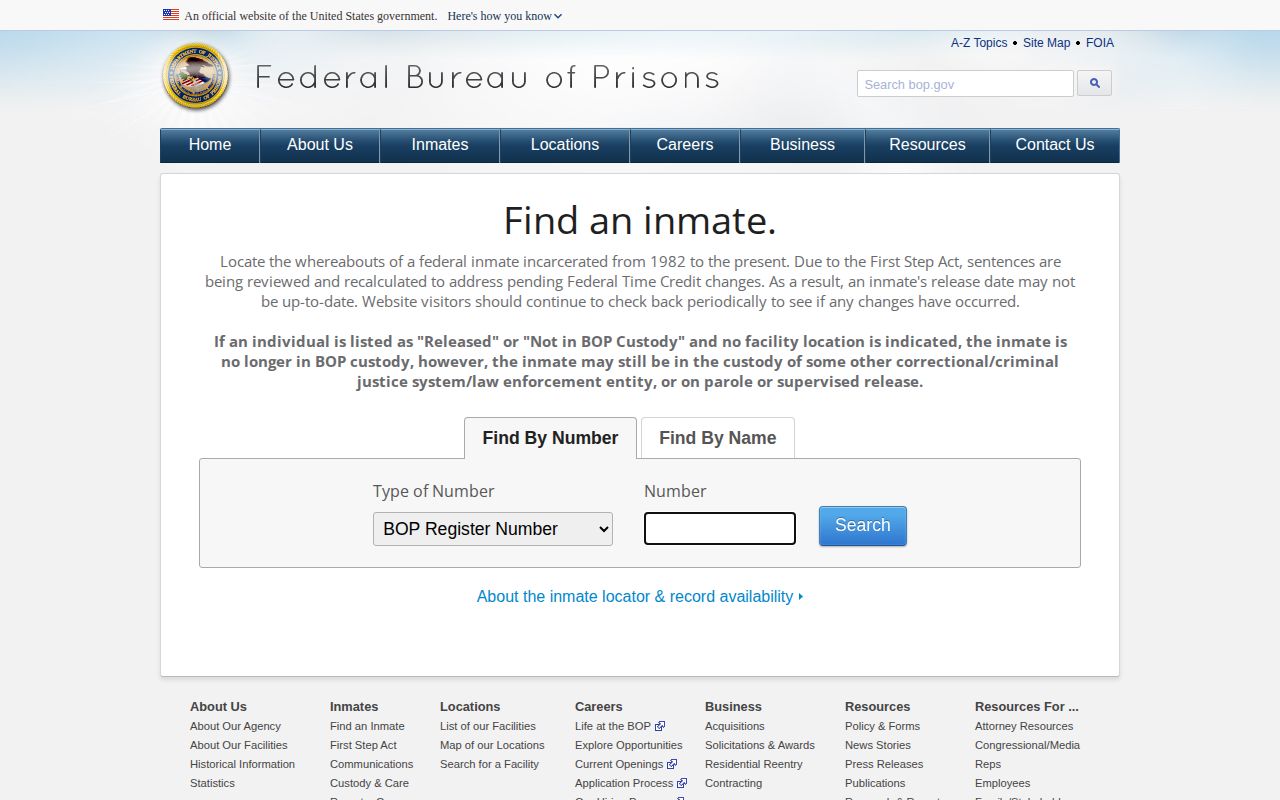
BOP and ICE can answer questions about people inside their own systems. Neither replaces Pike County Records or the Illinois court docket, which remain the local starting points for county arrests.
Pike County Busted Booking Terms
A word like booking can mean one thing at the jail and something looser in a news story. These plain-language definitions keep a Pike County busted search pointed at the right office.
- Booking
- Jail intake after an arrest, including entry of identity, charges or holds, and custody information.
- Arraignment
- An early court appearance where the case and custody issues move into the court process.
- Bond
- A court-ordered release condition or payment path. The jail’s payment instructions are not a bond schedule.
- Disposition
- The later court result. It may differ from the charge listed at booking.
- Expungement
- Court-ordered relief that can direct eligible records to be erased under Illinois law.
Check the source date alongside the court result before drawing any conclusion from a term.
Pike County Busted Mugshots by City
City pages here follow the record custodian. They don't invent municipal jail systems that do not exist. Pittsfield runs its own Police Department, yet its booked arrestees still surface in the county Weekly Arrests table. Barry's official police page states the city contracts jail services through the Pike County Sheriff. Griggsville appears on the Sheriff's Patrol Division page. In every case, the county jail and records office stay the shared route.
- Pittsfield Busted Mugshots covers the city Police Department, its FOIA form, county booking destination, and countywide news coverage.
- Barry Busted Mugshots explains the Sheriff contract, Barry Station reference, and county records path.
- Griggsville Busted Mugshots explains the Sheriff protection route, the absence of a standalone city blotter, and county booking records.
Herald-Whig and Muddy River News both cover Pike County as one region. A city name inside a weekly summary does not create a city-level mugshot feed. So keep the arresting-agency field intact when you search. Start with the county date range. Then ask the agency that made the arrest for the incident report itself.
Note: A city label identifies coverage and agency, not a separate jail. Pike County Jail is the countywide booking destination documented in the research.